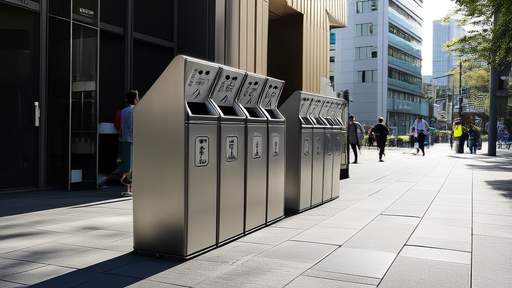
In the bustling streets of Tokyo, where neon lights flicker and ancient traditions blend seamlessly with modernity, one might expect to find the usual urban clutter: discarded wrappers, overflowing trash cans, and the general detritus of daily life. Yet, Japan stands as a remarkable anomaly in this regard. Its cities are almost eerily clean, with streets that gleam and public spaces that are virtually free of litter. But herein lies a paradox: despite its reputation for impeccable cleanliness, Japan is surprisingly devoid of public trash cans. This peculiar phenomenon has left many visitors, particularly Western travelers, scratching their heads in confusion.
Professor Chris McMorran, a distinguished scholar of Japanese studies at the National University of Singapore, has witnessed this bewilderment firsthand. Each year, as he takes his students on educational excursions to Japan, one question inevitably arises: "Why aren't there any trash cans?" It is a query that echoes through the minds of countless tourists who flock to Japan, drawn by its rich cultural heritage, technological marvels, and, ironically, its pristine public spaces. How can a country be so impeccably clean when there seems to be no convenient way to dispose of garbage in public areas?
This conundrum is not merely anecdotal. Earlier this year, the Japanese National Tourism Organization (JNTO) conducted a comprehensive survey of passengers departing from Japan. The results were revealing: the number one logistical challenge faced by tourists was the scarcity of trash cans. A staggering 22% of respondents cited the difficulty of finding a place to discard waste as the most significant issue they encountered during their trip. This figure surpassed other common concerns, such as the lack of English speakers (15%) and overcrowding at popular attractions (13%).
To understand Japan's unique approach to trash disposal, one must delve into the intricate tapestry of Japanese etiquette and cultural norms. For many Western travelers, especially budget-conscious young adventurers, the absence of trash cans can be a significant inconvenience. These travelers often opt for quick, on-the-go meals from convenience stores or street stalls, such as the ubiquitous onigiri (rice balls) or trendy Instagrammable desserts. Once they finish their snacks, they are left searching in vain for a place to dispose of the wrappers and containers.
In contrast, the local Japanese population has long adhered to a different set of practices. While it is common for Japanese people to purchase food and drinks from vending machines or konbini (convenience stores), they rarely consume these items while walking. In fact, eating while walking is considered poor etiquette in Japan, so much so that some cities have banned the practice outright. Instead, it is customary to take these grab-and-go foods home or to the office, consume them there, and then dispose of the trash in a proper bin. If they do eat on the go, most Japanese people carry a small bag with them to temporarily store their trash until they can reach a suitable disposal location.
This cultural nuance, however, has been severely tested by the influx of mass tourism. One notable example is the UNESCO-listed city of Nara, a 45-minute bullet train ride east of Osaka. Nara is renowned for its historic temples, Buddhist artifacts, and, most famously, its wild deer. These deer have become a beloved symbol of the city, known for their charming habit of taking crackers from visitors and "bowing" in gratitude. However, the increasing number of tourists has led to a troubling side effect: trash has become a life-or-death issue for the deer. In 2019, nine deer perished after ingesting plastic waste left behind by careless visitors. To address this problem, trash cans were removed from Nara's parks in 1985 to prevent the deer from trying to eat from them. Signs were posted throughout the city, cautioning people not to litter and emphasizing the potential harm to the deer from consuming foreign objects. However, as the number of tourists continued to rise, it became evident that these measures were insufficient. Many visitors failed to follow the local custom of taking their trash with them. In response, the city has recently reconsidered its policy and installed several solar-powered trash bins in the busiest tourist areas. These bins are adorned with the message "Save the deer" in English, serving as a poignant reminder of the delicate balance between tourism and environmental responsibility.
Tokyo's trendy Shibuya neighborhood has also faced challenges in managing the trash left behind by tourists. Local politicians have taken decisive action to address the issue, particularly during the notoriously rowdy Halloween celebrations. They have made it illegal to consume alcohol on the streets, not only to reduce noise complaints but also to curb the amount of litter generated. This move reflects a broader effort to maintain the cleanliness and order of public spaces, even in the face of growing tourism pressures.
In the digital age, social media platforms like TikTok have become a hub for sharing tips and insights about Japanese etiquette for tourists. Many travelers post videos comparing Japan favorably to other countries like Canada and the US in terms of public hygiene. They offer practical advice on where to find trash cans when needed, noting that many vending machines have a small bin attached. For some tourists, the scarcity of easily accessible rubbish bins adds a charming quirk to their Japanese experience. For others, however, it is a significant nuisance that detracts from their enjoyment of the trip.
Hong Kong resident Rubin Verebes falls into the latter category. During his first visit to Japan in September 2024, he was frustrated by the difficulty of finding a place to dispose of his trash. "It is infuriating to walk around Tokyo the whole day, racking up 20,000-plus steps on your feet, and not find a single bin to throw away your plastic wrapping from your sandwich," he lamented. "Some 7-Eleven, Family Mart, or Lawson stores didn't even have rubbish bins to use, so you are left to hold these dirty wrappers or bottles all day until you get back to your hotel. It's great that the streets are clean, but it is annoying having to hold trash all day long."
Paul Christie, CEO of the travel company Walk Japan, takes a different perspective when addressing questions from clients about the lack of trash cans. He emphasizes the values of respect and community that underpin Japanese society. "The Japanese prize cleanliness and cooperate as a society to make it so," he explains. "The result is that their country rates highly in terms of neatness and tidiness." This collective commitment to cleanliness is evident in the spotless public transport system, where passengers treat stations, trains, buses, and fellow travelers with respect and act accordingly.
The scarcity of public trash cans in Japan is not solely a matter of cultural preference or logistical inconvenience. There is a darker, more somber reason behind this phenomenon. On March 20, 1995, Japan was shaken by a tragic event that would forever change its approach to public safety. Members of the Aum Shinrikyo doomsday cult carried out sarin gas attacks on several Tokyo subway trains, killing 14 people and injuring at least 5,500 more. The cult members brought plastic packets of sarin onto subway cars, dropped them on the floor, and then punctured the bags with umbrella tips as they left the train. Several subway workers who attempted to clean up the spill and help passengers escape were among those who perished. This horrifying incident shocked Japan to its core and led to a series of security measures, including the removal of trash cans from subway and train stations. While some trash cans still exist in these locations, they now feature clear plastic bags that allow police officers to easily see the contents, replacing the opaque metal bins of the past.
This phenomenon is not unique to Japan. Following several bombings by the paramilitary Irish Republican Army in the 1970s, many trash cans were removed from London Underground stations and major intersections throughout the UK capital. Japanese authorities have also been vigilant in monitoring terror incidents overseas. After train bombings in Madrid in 2004, two Japanese rail lines stopped maintaining trash cans, citing concerns about terrorism.
Despite the challenges posed by the lack of public trash cans, Japan has found creative solutions to help travelers manage their waste. One such solution is the traditional Japanese art of furoshiki. Furoshiki are square pieces of cloth used to wrap items, and they can be found in nearly every souvenir shop in Japan. These cloths can serve a dual purpose: in the short term, they can be used to carry trash until a suitable bin is found, and then they can be repurposed as decorative items back home, adding a touch of Japanese culture to one's living space.
Japan's approach to trash disposal is a fascinating blend of cultural norms, environmental consciousness, and security concerns. While it may initially perplex visitors, it ultimately reflects a society that values cleanliness, respect, and community cooperation. As Japan continues to welcome tourists from around the world, it is essential to understand and appreciate the unique practices that contribute to its remarkable cleanliness. After all, in a country where even the absence of trash cans has a story to tell, every detail holds a lesson in cultural insight and environmental stewardship.
By William Miller/Jun 4, 2025

By Christopher Harris/Jun 4, 2025

By Samuel Cooper/Jun 4, 2025

By Sophia Lewis/Jun 4, 2025

By Eric Ward/Jun 4, 2025
By Amanda Phillips/Jun 4, 2025
By Samuel Cooper/Jun 4, 2025

By Natalie Campbell/Jun 4, 2025

By Samuel Cooper/Jun 4, 2025

By Grace Cox/Jun 4, 2025

By David Anderson/Jun 4, 2025

By Jessica Lee/Jun 4, 2025

By Emma Thompson/Jun 4, 2025
By Grace Cox/Jun 4, 2025