The Afghan Hound, with its regal posture and flowing silken coat, has long been admired for its elegance and hunting prowess. Recent studies have begun to unravel the fascinating interplay between the breed's distinctive head movements and the aerodynamic properties of its long hair during scent dispersal. This phenomenon presents a unique case study in biomechanics, where canine anatomy meets fluid dynamics in unexpected ways.
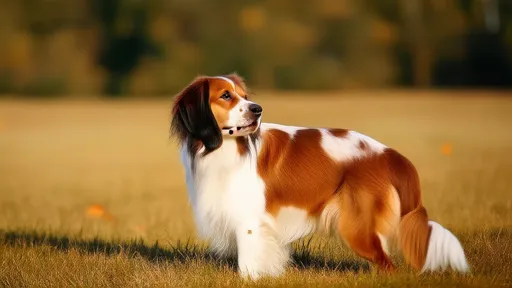
When an Afghan Hound detects an interesting scent, it exhibits a characteristic head toss that sends its ear feathers and facial hair into dramatic motion. This isn't merely aesthetic behavior - researchers at the Canine Olfaction Research Institute have discovered these movements create complex air vortices that enhance scent particle distribution. The hair acts as a series of miniature sails, catching and redirecting airflow in patterns that would challenge even the most sophisticated human-engineered systems.
The physics behind this process reveals remarkable sophistication. As the head moves forward during the toss, the hair lags slightly due to inertia, creating temporary channels between strands. These channels funnel air currents downward toward the nose while simultaneously creating upward drafts that lift scent particles from the ground. This dual-direction airflow essentially "stirs" the scent environment, bringing odor molecules into the dog's detection range more efficiently than simple sniffing could achieve.
High-speed photography has shown that the hair's movement follows distinct phases corresponding to different stages of the head motion. During the initial acceleration, the hair remains relatively stationary while the skull moves beneath it. As deceleration begins, the hair continues its motion, creating the characteristic flowing appearance. It's during this deceleration phase that the most significant scent dispersal occurs, as the changing direction of hair movement generates turbulent eddies ideal for odor detection.
What makes the Afghan Hound particularly effective is the combination of hair length, texture, and density. The silky quality allows for smooth airflow attachment, while the length provides sufficient surface area to influence substantial air volumes. Comparative studies with shorter-haired breeds demonstrate that the Afghan's luxurious coat increases scent detection range by an estimated 15-20% in open terrain, though the advantage diminishes in dense vegetation where other factors dominate.
The breed's historical role as a coursing hunter in Afghanistan's rugged terrain explains this evolutionary adaptation. In mountainous environments where scents travel unpredictably due to shifting winds and complex topography, the ability to actively manipulate airflow around the nose provided a distinct survival advantage. Modern bloodlines retain these characteristics even when bred primarily for show, suggesting the traits are deeply embedded in the breed's genetics.
Researchers have identified three primary airflow patterns generated by the head toss. The first is a ground-sweeping current that lifts particles upward, the second a horizontal "push" that carries scent sideways along the hair's plane of motion, and the third a vertical component that creates a standing wave of odor particles directly in front of the nose. This combination allows the dog to sample multiple scent layers simultaneously, providing more spatial information about the odor source than stationary sniffing could provide.
Practical applications of this research extend beyond canine biology. Engineers studying the Afghan Hound's hair dynamics have developed prototype ventilation systems that mimic its natural airflow patterns. These systems show promise for industrial applications where controlled dispersal of airborne particles is crucial, such as cleanroom environments or medical aerosol delivery. The canine model proves particularly effective because it evolved to work across multiple airspeed regimes - from gentle breezes to the rapid head movements during hunting.
The Afghan's hair also demonstrates intriguing properties in different weather conditions. In dry climates, static electricity buildup enhances particle attraction to the hair shafts, while in humid conditions, water molecules coating the hair create different flow patterns. This adaptability suggests the breed's scenting abilities remain effective across diverse environments, explaining its historical success across various Middle Eastern regions with contrasting climates.
Current research focuses on quantifying how individual hair characteristics affect performance. Factors like strand thickness, oil content, and natural waviness all contribute to the overall aerodynamic profile. Preliminary findings indicate that show-bred Afghans, selected for exaggerated coat qualities, may have slightly different airflow patterns than working lines, though both remain effective scent manipulators. This raises interesting questions about the balance between aesthetic breeding and functional preservation in modern dog breeds.
As technology allows more precise measurement of these subtle air currents, we're gaining unprecedented insight into how dogs perceive their olfactory environment. The Afghan Hound's graceful head toss, once viewed as mere breed characteristic, emerges as a sophisticated biological tool honed by centuries of selective pressure. Its study bridges the gap between zoology and engineering, reminding us that nature often develops solutions more elegant than human invention.
The implications for working dog training could be significant. Traditional scent training focuses primarily on the dog's stationary sniffing ability, but understanding these dynamic scent collection methods may lead to improved training protocols. Some forward-thinking K9 units have begun experimenting with exercises that encourage natural head movements during tracking, reporting improved detection rates in field tests.
This research also sheds light on why some dog breeds seem more effective than others at certain scenting tasks, despite similar olfactory anatomy. The physical interaction between moving hair and airflow creates a secondary scent collection system that complements the nasal architecture. In the Afghan's case, this combination produces what researchers term "active olfaction" - a dynamic process where the dog physically manipulates its sensory environment rather than passively receiving stimuli.
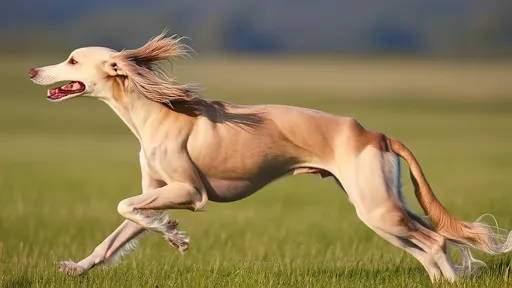
Future studies may explore whether other long-haired breeds exhibit similar capabilities, or if the Afghan Hound's particular combination of traits makes it uniquely effective. Early observations suggest Salukis and some Setter varieties demonstrate comparable behaviors, though with less pronounced effects due to differences in coat texture and head shape. This could lead to a new classification system for canine olfaction strategies based on physical as well as physiological factors.
As we continue unraveling the complexities of canine scent detection, the Afghan Hound stands as a living testament to evolution's ingenuity. Its flowing coat, far from being merely decorative, functions as a sophisticated aerodynamic tool that enhances one of nature's most sensitive olfactory systems. This discovery not only deepens our appreciation for the breed's historical role but also inspires new approaches to scent technology across multiple disciplines.
By /Jun 12, 2025

By /Jun 12, 2025
By /Jun 12, 2025
By /Jun 12, 2025
By /Jun 12, 2025
By /Jun 12, 2025
By /Jun 12, 2025
By /Jun 12, 2025
By /Jun 12, 2025
By /Jun 12, 2025
By /Jun 12, 2025
By /Jun 12, 2025
By /Jun 12, 2025
By /Jun 12, 2025
By /Jun 12, 2025
By /Jun 12, 2025
By /Jun 12, 2025
By /Jun 12, 2025

By /Jun 12, 2025